From Fallen Trees to Valuable Lumber: The Complete Guide to Portable Sawmilling
When a tree falls, it might seem like just a big cleanup job. But with the right steps, that fallen trunk can become usable lumber, landscaping materials, or even an investment for your property. Portable sawmilling makes this possible by bringing the mill to the tree, allowing wood to be cut on-site into boards, slabs, and beams without the hassle of moving logs. For homeowners or landowners dealing with storm damage or tree removal, this approach can turn a loss into something genuinely useful.
At Jenkins Tree Care, we see how important both the first cut and the final step are. Safe tree removal protects your property, while thoughtful cleanup and wood recovery increase the value of the remaining wood. Portable sawmilling is especially handy when a tree is large, healthy enough to mill, or too costly to discard as waste. It also supports sustainability by keeping good wood in use instead of sending it to a landfill.
In this guide, you'll learn how portable sawmilling works, which trees are best for milling, the benefits of turning logs into lumber, and what to expect if you decide to use this service after a tree falls. We'll also cover practical tips, safety considerations, and ways to make the most of your wood. This article connects wood recovery with the same thoughtful approach used in professional tree pruning and brush removal.
What Portable Sawmilling Actually Is
A mobile mill that comes to your property
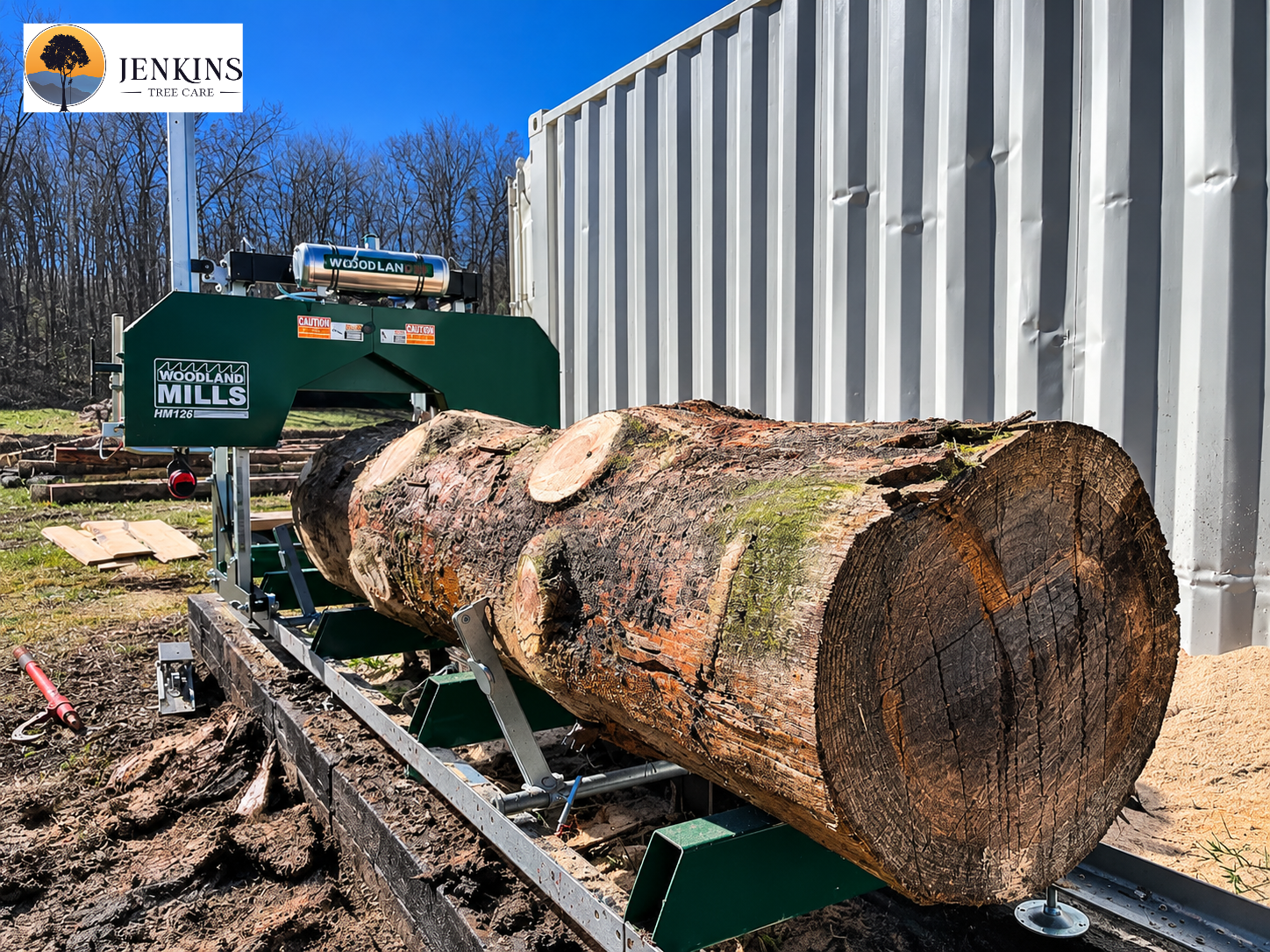
Portable sawmilling is just what it sounds like: a sawmill on a trailer or mobile platform that can be brought directly to your property. Instead of taking a heavy log to a stationary mill, the mill is set up near the wood and used on-site to cut boards, slabs, or beams. This is particularly useful after storm damage, tree removal, or clearing a wooded area where logs are too big or cumbersome to move easily.
The setup usually includes a bandsaw-style mill, log supports, leveling equipment, and tools for measuring board thickness. Once the log is positioned securely, the operator slices it into rough lumber based on your goals. Some people want dimensional boards for construction, while others prefer live-edge slabs for tables or shelving. The mill's mobility means the process can be tailored to the exact log and project.
How the process works from start to finish
First up is log inspection. The operator checks for rot, metal, cracks, insect damage, and overall size. If the wood is sound enough, the log is cut into sections that fit the mill and project plans. Then the bark may be removed or left in place, depending on what you want. Once secured and leveled, the first cut creates a flat reference surface. After that, the board thickness is adjusted for each pass.
This process is precise but also efficient. A skilled operator can turn a tree into a stack of useful lumber in a single day, depending on log size and conditions. In many cases, the lumber is stacked for drying or stored for later use. If you're interested in tree care beyond milling, services like stump grinding can help clean up and reclaim the area for future landscaping.
For more on safe wood handling and milling standards, the USDA Forest Service offers information on wood products and forest resource management at fs.usda.gov. This public guidance is useful for anyone thinking about wood quality, forest stewardship, or sustainable material use.
Why Fallen Trees Can Be Worth Saving
The hidden value inside a log
Many underestimate how valuable a fallen tree can be. A straight, healthy trunk from a hardwood species might produce lumber for furniture, flooring, trim, accent walls, or structural projects. Even smaller logs can be milled into attractive boards or decorative slabs. The value depends on the species, size, grain pattern, moisture content, and the tree's overall condition.
Hardwoods like oak, walnut, maple, cherry, and hickory are especially desirable because they're durable and visually appealing. Even certain softwoods can be useful for shelving, rustic projects, or utility lumber. What matters most is whether the wood is structurally sound and can be cut with minimal waste. If a tree falls during a storm but the trunk remains intact, milling may preserve a large portion of its usefulness.
Economic benefits for homeowners and landowners
Portable sawmilling can cut disposal costs and create usable material at the same time. Instead of paying to haul away a large log, you might convert it into boards you would otherwise have to purchase. For homeowners planning a deck repair, shed project, barn upgrade, or woodworking project, this can be a practical way to stretch value from an existing resource. It's also useful for rural landowners with multiple trees down after weather events.
There's also emotional value. A tree that shaded a yard for decades can be turned into something meaningful, like a dining table, mantel, or keepsake bench. That kind of reuse gives the tree a second life and keeps its story present in the home. In many cases, that sentimental benefit is just as important as the financial one. When combined with careful site work and safe cleanup, milling helps property owners feel better about the whole tree removal process.
What Makes a Tree Good for Portable Sawmilling
Species, straightness, and size matter
Not every fallen tree is a good milling candidate. Straight trunks are usually best because they produce longer boards with less waste. Trees with minimal branching in the lower trunk are easier to mill. Large diameter logs often provide more value because they yield wider boards and more options for cutting patterns. A log with a tight grain and healthy heartwood will generally produce better results than one with major defects.
Species also matters. Dense hardwoods tend to be the most sought after, especially if the grain is attractive or the wood has a known market value. However, even less glamorous species can be useful when the goal is to produce custom lumber for a personal project. The main question is not whether the tree is “valuable” in a commercial sense, but whether it can be used effectively for a purpose that matters to you.
Moisture, rot, and storm damage can limit value
Once a tree is on the ground, timing becomes important. Wood begins to change quickly after a tree falls, and prolonged exposure can lead to checking, staining, insect activity, or fungal growth. If the trunk has been sitting for too long, the outer layers may degrade even if the inner wood remains usable. Rot near the base or inside the trunk can also reduce the amount of recoverable lumber.
Storm-damaged trees are a special case. If a tree has split, twisted, or partially uprooted, some sections may still be worth milling while others should be discarded. That's why professional evaluation matters. A trained crew can determine whether the tree should be milled, removed, trimmed, or broken down into safer sections. When branches are also involved, tree trimming and careful debris clearing can support the recovery process.
The International Society of Arboriculture provides educational resources on tree health and structural concerns at treesaregood.org. Their guidance can help property owners recognize when a tree has value and when it may be too damaged to preserve.
The Practical Benefits of Portable Sawmilling
Less hauling, less waste, more efficiency
One of the biggest perks of portable sawmilling is convenience. Instead of organizing heavy equipment or dealing with oversized debris, the mill comes to the material. This saves time, cuts transportation costs, and avoids moving massive logs that are tough to lift. For properties with limited access, steep slopes, or soft ground, on-site milling can be more practical than traditional removal methods.
It also reduces waste. Many trees removed after storms or property work still contain usable wood. Without milling, that wood might be chopped into firewood, chipped, or discarded. Portable sawmilling preserves the tree’s best sections for future use, supporting sustainable land stewardship and a more thoughtful approach to tree care.
Better customization for building and woodworking
Portable sawmilling gives you more control over what the finished wood becomes. You can request specific thicknesses, slab widths, or grain orientations depending on your goals. Want boards for a future pergola? Need rustic slabs for a custom table? Looking for material to match an existing project? Milling on-site gives you options that standard lumber yards can't always provide.
This flexibility appeals to builders, woodworkers, and creative homeowners. It's not just about salvaging wood; it's about shaping a resource to fit a specific vision. When the tree belongs to your property, you also gain a personal connection to the finished material. That connection can make a project feel more meaningful and memorable.
Environmental advantages of local wood recovery
Portable sawmilling supports a more circular use of materials. Instead of cutting down a tree, paying to remove it, and then buying new lumber, you're using what's already on-site. This cuts down on transportation emissions and reduces demand for freshly processed lumber when suitable material is available. It also gives old-growth character, storm-felled wood, or heritage trees a second purpose.
For landowners who care about sustainability, this is a strong option. It complements other responsible services like tree cabling, which can help preserve valuable trees before removal becomes necessary. And if the property needs a broader cleanup afterward, brush removal can help clear the remaining debris so the site is safe and usable again.
What to Expect During a Portable Sawmilling Job
Site preparation and log placement
Before milling starts, the site needs to be prepped. That usually means clearing access for the equipment, identifying a level working area, and ensuring the log can be safely positioned. If the tree was recently removed, the log may already be cut into manageable sections. If not, the trunk may need to be bucked into lengths that match the project. Good preparation helps the milling process move quickly and safely.
The crew will also look for hazards like rocks, dirt embedded in the bark, nails, fencing wire, or other metal. These can damage the blade and reduce the quality of the lumber. In some cases, a log may be cleaned or adjusted before cutting begins. The goal is to produce clean, usable boards while protecting the equipment and the operator.
Cutting, stacking, and drying the lumber
After the first cuts, the lumber is usually stacked carefully to allow air movement. This step matters because freshly cut boards contain a lot of moisture. If boards are stacked improperly, they can warp, cup, or crack as they dry. Stickers, weights, and shade are often used to keep the stack stable and improve drying results. Depending on the wood species and intended use, the lumber may later be kiln-dried or left to air dry.
Drying takes patience, but it's a critical part of getting usable lumber. The final quality of the boards depends not just on the cut but on how the wood is handled afterward. A good milling job doesn't end when the blade stops; it ends when the lumber is ready for its next purpose. That might be furniture, framing, shelving, or storage for a future build.
Safety, Cleanup, and When to Call Professionals
Why tree work and milling should be coordinated carefully
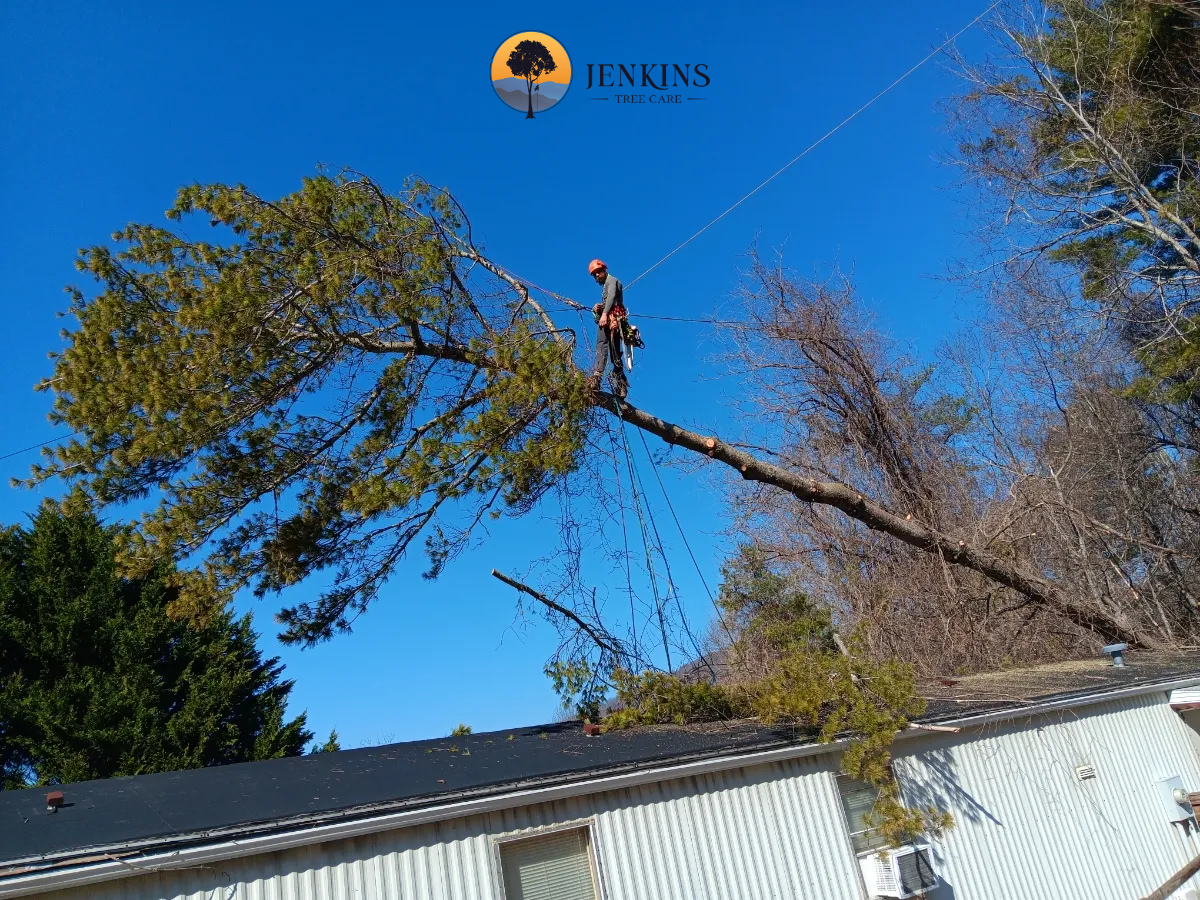
Tree work isn't just about cutting wood. It's about managing risk. Fallen trunks can shift, roll, or contain hidden stress points. Branches can spring unexpectedly, and unstable logs can create serious hazards. For that reason, portable sawmilling is best used when the tree has been assessed and prepared by experienced professionals who understand structural risks and jobsite safety.
Coordinating milling with removal and cleanup also helps protect your property. A team that handles the tree carefully from the start can preserve more of the trunk for use and reduce unnecessary damage to the yard. If the tree is too dangerous to preserve, safe removal is the right choice. If it can be saved, milling adds value without compromising safety. That's the kind of judgment homeowners should look for in a tree service partner.
When a tree should not be milled
There are times when milling isn't the right answer. If the tree has extensive rot, heavy pest damage, dangerous contamination, or severe structural failure, the wood may not be worth preserving. Logs that are excessively twisted, broken, or embedded with debris may also be poor candidates. In these situations, cleanup, chipping, or disposal may be safer and more cost-effective than trying to salvage lumber.
If you're unsure, ask for a professional assessment. A qualified crew can explain whether the tree is a milling candidate or whether another service is better suited to the situation. For example, a damaged trunk may still require tree removal first, followed by stump work and site clearing. Often, the right answer is a combination of solutions rather than just one service.
For safety guidance related to wood processing and outdoor work, OSHA provides useful standards and recommendations at osha.gov. While not every homeowner will need to study the regulations closely, the information reinforces the importance of proper equipment and safe procedures when working with heavy wood.
Frequently Asked Questions About Portable Sawmilling
How much lumber can one tree produce?
The amount of lumber depends on the tree’s diameter, length, species, straightness, and condition. A large, healthy hardwood trunk can produce a surprising amount of usable material, while a smaller or damaged tree may yield only a few boards. Because every log is different, the best way to estimate yield is through an on-site evaluation.
Is portable sawmilling worth it for smaller properties?
Yes, especially if the tree has special value or if you want to reuse the wood for a project. Even a modest log can produce attractive boards or slabs for furniture, décor, or a custom outdoor feature. If your main goal is to avoid waste and create something useful, portable sawmilling can be worthwhile even on a small lot.
How long does the milling process take?
Most jobs are completed in a few hours to a full day, depending on the number of logs, their size, and the desired cuts. Additional time may be needed for sorting, stacking, or cleanup. If the tree was part of a larger storm response or site restoration, the full process may take longer because of access, debris, or safety concerns.
Can all wood be used right away?
No. Freshly cut lumber usually needs time to dry before it is suitable for most construction or furniture projects. Some projects can use green wood, but many require seasoning to prevent movement and cracking. Your milling plan should include drying and storage so the final product stays stable and useful.
How Jenkins Tree Care Helps You Get More from Every Tree
From hazard management to resource recovery
Jenkins Tree Care takes a practical, customer-focused approach to tree work. Whether a tree needs to be removed, pruned, trimmed, or cleaned up after a storm, the goal is always to protect your property and help you make the most of what remains. That same philosophy supports wood recovery when a fallen tree still has value. By planning the work carefully, our team can help you decide whether the tree should be removed, preserved, or prepared for milling.
We also understand that no two properties are alike. Some homeowners want the fastest cleanup possible. Others want to save lumber for future use or keep part of the tree as a sentimental keepsake. We work with both priorities in mind. That means clear communication, careful handling, and a process that respects both your property and your goals.
Choosing the right next step for your property
If you are dealing with a downed tree, the best next step is to assess safety first. Once the area is secure, you can decide whether the wood is worth saving. If the trunk is strong and sound, portable sawmilling may be an excellent choice. If the tree is too damaged, our crew can help with removal, cleanup, stump work, and site restoration so the area is ready for its next use.
For homeowners who want a complete solution, combining milling with other services can create the best outcome. A carefully planned approach might include pruning nearby limbs, removing the hazard, grinding the stump, and clearing excess brush. That combination protects the landscape while preserving useful wood whenever possible.
Conclusion: Turning a Loss into a Lasting Resource
Portable sawmilling changes the way people think about fallen trees. Instead of seeing only debris, you can see lumber, possibility, and long-term value. With the right tree, the right equipment, and the right team, a damaged or removed trunk can become boards, slabs, and materials that support future projects. That is good for your budget, good for the environment, and good for the story your property tells.
If you have a tree down on your land, do not assume it must become waste. Evaluate its condition, consider the wood’s potential, and work with professionals who understand both tree care and wood recovery. Jenkins Tree Care is here to help you make smart decisions about tree trimming, removal, cleanup, and resource-minded solutions that protect your property and maximize value. When you are ready to talk through your options, reach out and let us help you turn a fallen tree into something useful, lasting, and worthwhile.