Have you ever only noticed a problem with a tree after a storm or when a branch suddenly falls? By then, it might be too late to prevent serious damage. Knowing when it's time to remove a tree can help you keep your home and family safe before a minor issue becomes a costly emergency.
This guide walks you through the signs that a tree may need removal, how to decide, and the modern methods arborists use to safely take down dangerous trees. You'll also discover when alternatives like pruning or cabling could work, how professionals assess risks, and why taking care of trees before problems arise is crucial for your property's safety. If you're weighing your options, consider looking into related services such as tree pruning and tree cabling before making a decision.
Tree care practices are always improving as arborists use more precise tools and better assessment methods. The International Society of Arboriculture says assessing tree risk is essential for managing trees responsibly because visible decline might not tell the whole story. In short, the safest choice isn’t always obvious, and a tree that looks healthy may not be safe.
Why Tree Removal Can Be a Safety Issue
When a Tree Stops Being an Asset
Healthy trees add shade, beauty, and value to your property, but a compromised tree can become a liability. You might need to remove a tree when its structure isn’t stable, when disease is widespread, or when roots have weakened its hold in the soil. These conditions significantly raise the risk of falling limbs or total failure.
Many people think tree removal should only happen after visible collapse, but experienced arborists know it's better to prevent than to react. A tree with decay, repeated storm damage, or severe leaning might not last much longer. If it's already causing debris, damaging surfaces, or threatening structures, removal becomes a practical safety measure rather than just a cosmetic choice.
How Risk Affects Homes and Outdoor Spaces
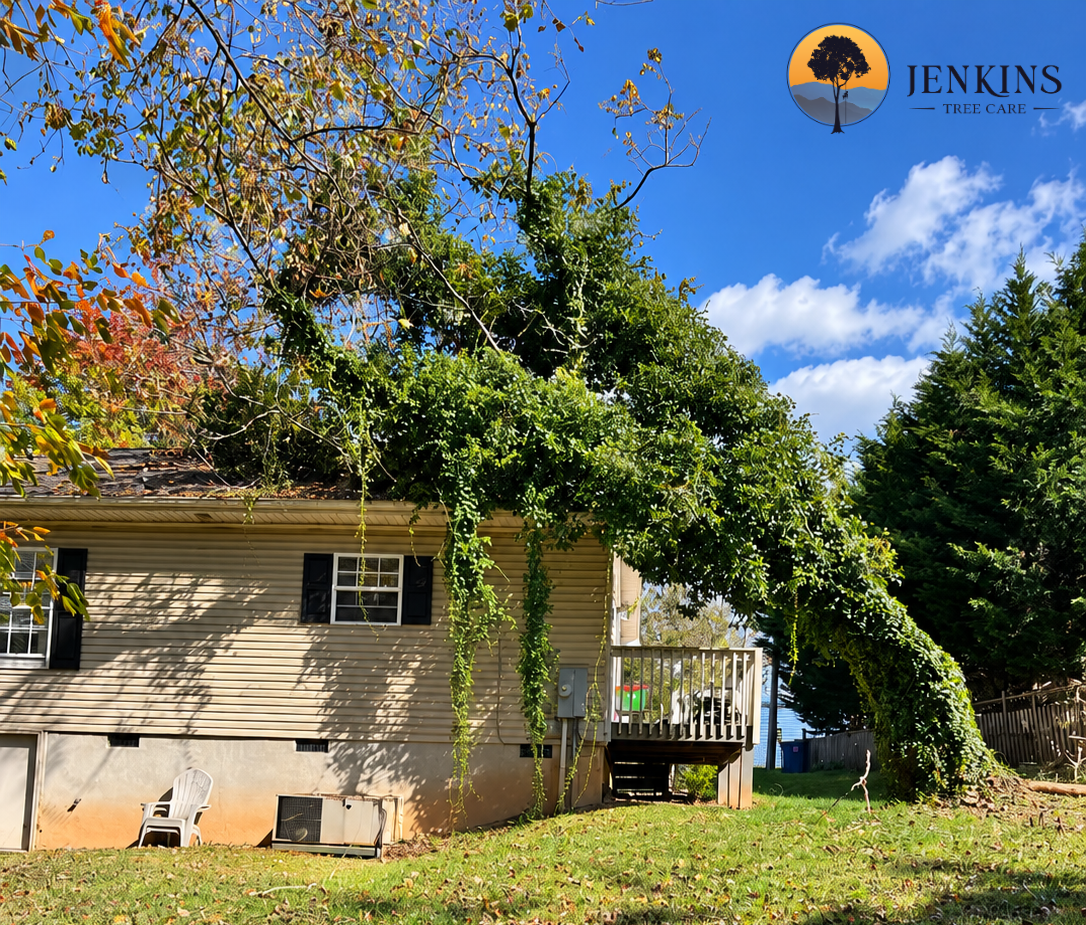
When trees cause property damage, it often involves roofs, fences, garages, vehicles, walkways, and underground utilities. Branches can fall without warning during wind or ice storms, and large trunks can shift in soaked soil. The risk is particularly high when trees grow close to structures or could fall on a home, driveway, or neighbor’s property.
That’s why professional tree services look at the whole site, not just the tree. If space around a tree is tight, removal might require specialized planning. In these cases, tree removal is often paired with stump grinding or brush clearing to make the property usable again and reduce future hazards.
Key Warning Signs a Tree May Need Removal
Visible Decay, Cavities, and Dead Wood
Decay is one of the clearest signs that a tree may be failing inside. Cavities, mushrooms at the base, hollow-sounding trunks, and dead branches in the canopy can indicate rot or structural weakness. While some trees can survive with minor damage, extensive decay often means the tree can’t safely support its own weight.
Dead limbs are also important warning signs because they can break during calm weather or in light winds. If dead wood keeps appearing even after pruning, the problem might be systemic rather than seasonal. In that case, removal may be safer than repeatedly trimming limbs that will continue to fail.
Leaning Trunks and Root Disturbance
If a tree starts leaning suddenly, it’s a major concern, especially if the tilt developed quickly after rain, wind, or nearby excavation. Slow, natural lean can be stable in some species, but rapid movement is a red flag. Root damage from construction, grading, trenching, or soil compaction can reduce the tree’s ability to stay upright.
Exposed roots, soil heaving, and cracks near the base also suggest instability. According to the National Park Service, tree risk assessment should consider both the tree’s condition and the surrounding site conditions. This broader view helps explain why a tree that looks fine from a distance can still be unsafe.
Disease, Pests, and Chronic Decline
Not all tree health problems can be fixed with pruning or fertilization. Advanced disease, pest infestations, root rot, and recurring canopy dieback may spread faster than the tree can recover. If a tree has lost too much vigor, its ability to heal and resist further damage drops sharply.
When decline is chronic, an arborist might recommend removal to protect surrounding trees and the rest of the yard. Infected material can sometimes spread disease, so quick action may help limit a bigger problem. If you’re unsure whether a tree is beyond repair, consulting an arborist is the best next step.
When Removal Is Better Than Pruning or Cabling
Limitations of Corrective Tree Care
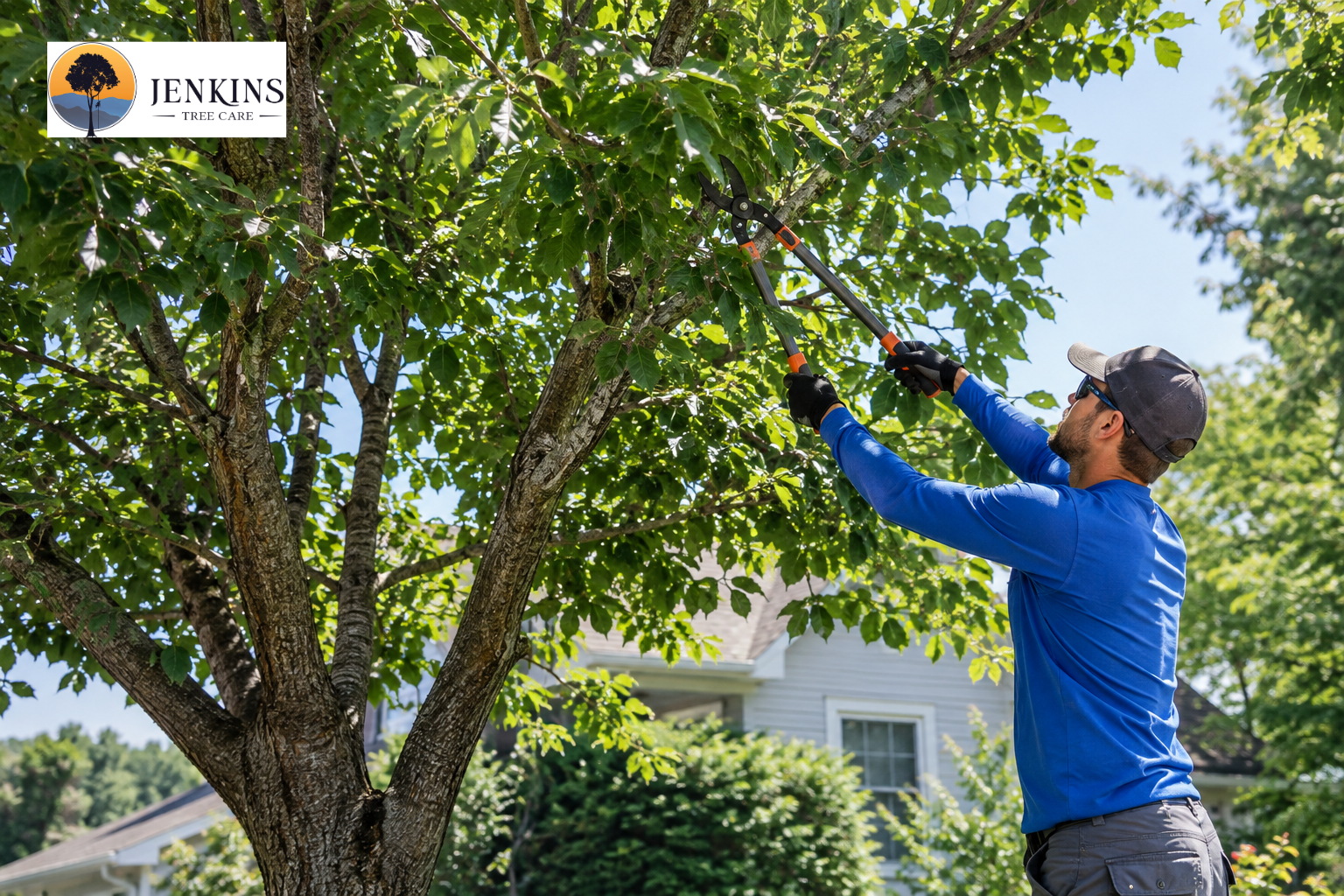
Tree pruning, cabling, and bracing can solve many structural issues, but they aren’t universal fixes. Pruning can remove weak limbs and improve balance, while cabling can add support to split leaders or heavy branches. However, if the trunk is severely compromised or the root system is failing, support methods may only delay the inevitable.
That’s why assessing the tree’s overall condition matters. A tree that has lost too much canopy, suffered repeated lightning damage, or developed large structural cracks may not respond well to support strategies. For healthier trees with localized issues, tree trimming or cabling may preserve the tree; for advanced failure, removal is often the safer decision.
What Certified Arborists Consider
Arborists look at factors like tree species, age, trunk taper, branch unions, root flare, soil moisture, and the surrounding target zone. They also consider how likely the tree is to fail and what the consequences would be. This kind of risk assessment follows best practices encouraged by professional organizations such as ISA, and it helps prevent guesswork from driving dangerous decisions.
In practical terms, a tree with moderate decay in an open field may be less urgent than a tree with the same decay hanging over a roof. The risk is contextual, which is why professional judgment matters. Homeowners who rely only on visual appearance can underestimate danger until it’s too late.
Latest Trends in Safe and Efficient Tree Removal
Crane-Assisted Removals and Precision Planning
Modern arboriculture has made tree removal safer, faster, and more controlled than older methods. Crane-assisted removals allow crews to lift large sections of a hazardous tree away from structures without dropping heavy wood into sensitive areas. This is especially valuable in tight urban lots, steep terrain, or properties where a traditional felling path is impossible.
These methods reduce impact on lawns, gardens, fences, and nearby buildings. They also limit the time workers spend inside the hazard zone, which improves safety for everyone involved. For homeowners, that usually means less disruption, cleaner results, and a more efficient project overall.
Sustainability and Eco-Friendly Practices
The tree service industry is also moving toward more sustainable practices. Many professionals now use electric equipment when appropriate, reuse wood and chips on-site, and encourage responsible replanting after removals. This balances the need for safety with a commitment to healthier urban forests.
That balance matters because removal should never be treated as wasteful by default. In some cases, taking out one compromised tree protects several nearby trees and preserves the rest of the yard. For properties that need cleanup afterward, brush removal and stump grinding help restore the yard while keeping future maintenance easier.
Data-Driven Tree Inventories and Planning
Another growing trend is the use of tree inventories and repeat assessments to manage long-term risk. Instead of reacting to a single emergency, property owners and managers can track tree condition over time and budget for maintenance before problems worsen. This approach is especially useful for larger properties, rental sites, and commercial landscapes.
Research from arXiv highlights the value of organized information management in tree-related industries, reinforcing the importance of informed decisions rather than isolated reactions. While the study comes from a different agricultural context, the principle still applies: better information leads to better outcomes when trees are part of a managed property.
How Local Conditions Influence Tree Removal Decisions
Terrain, Storms, and Crowded Spaces
Local conditions can change the risk profile of a tree dramatically. On sloped lots, saturated soil may fail faster after heavy rain. In dense neighborhoods, a falling limb may have less room to drop safely, which increases the potential for damage. Trees near utility lines, alleyways, or compacted construction zones may also need closer monitoring.
That is why property-specific evaluation matters more than general rules. A tree that seems manageable in a wide open yard may be dangerous in a tightly built environment. Local crews who understand regional weather patterns, soil types, and mature neighborhood trees are often better positioned to make the right call.
Why Asheville Property Owners Need Tailored Guidance
Asheville’s terrain, rainfall, and mix of mature landscapes create unique tree-care challenges. Hillsides, older shade trees, and limited access points can all make removals more technical. In this type of environment, working with a local team that understands the site can reduce risk and improve results.
Jenkins Tree Care provides tree service solutions designed around those conditions, including careful removals, pruning, and stump grinding. If a tree is still salvageable, the team may recommend preservation strategies first; if not, removal is planned with safety and cleanup in mind. That kind of tailored approach is especially helpful for homeowners who want both protection and curb appeal.
What to Expect During a Professional Tree Removal
Inspection, Estimate, and Risk Review
The process usually begins with an arborist inspection. During this visit, the professional evaluates the tree’s health, the hazard level, access challenges, and any nearby targets that could be affected. Homeowners should expect clear communication about whether removal is necessary and what alternatives, if any, might still be viable.
A detailed estimate should explain the method, cleanup scope, and any additional services needed afterward. If a stump remains, stump grinding can remove the remaining hazard and make the area easier to use. Clear expectations from the start make the project smoother and help avoid surprises.
Equipment, Technique, and Site Protection
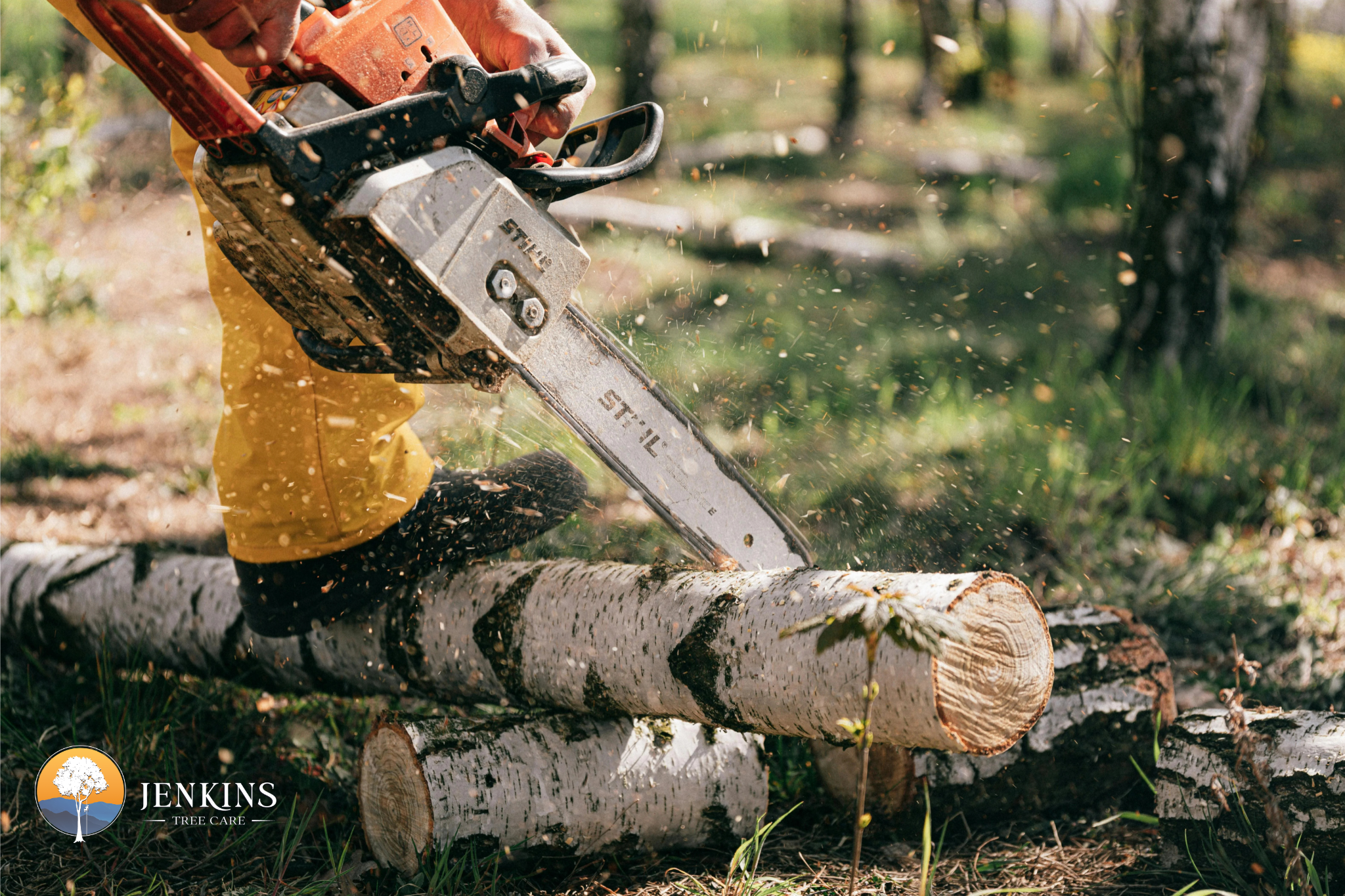
Professional crews use ropes, rigging systems, chainsaws, lifts, and sometimes cranes to remove the tree in sections. The method depends on the tree’s size, the property layout, and the level of risk. In many cases, the crew will protect nearby surfaces and carefully lower each piece to avoid unnecessary damage.
Good tree removal is as much about precision as it is about power. The best crews plan the cut sequence, monitor the weather, and keep a close eye on changing conditions as the work proceeds. This is one reason why professional removal often produces better long-term results than trying to manage a hazardous tree as a DIY project.
Cleanup and Restoration
Once the tree is down, the remaining debris should be cleared promptly. Branches, logs, and wood chips can be handled in ways that match the homeowner’s goals and the site’s needs. For some properties, keeping mulch is useful; for others, full debris removal is the priority.
After cleanup, the property may need follow-up care such as stump grinding, soil grading, or replacement planting. That is also a good time to consider whether nearby trees need maintenance. If the hazard came from crowded growth, moving forward with targeted pruning or trimming can help prevent another problem from forming.
How to Decide Whether a Tree Should Be Removed
Use a Simple Decision Checklist
If you’re unsure what to do, start with a few basic questions. Is the tree leaning more than before? Are there visible signs of decay, dead wood, or root damage? Has the tree already dropped large limbs or caused damage to nearby structures?
If you answer yes to one or more of these questions, the tree deserves professional attention. The goal isn’t to remove every imperfect tree, but to identify the ones that are no longer safe to keep. A thoughtful assessment often reveals whether the best path is preservation, monitoring, or removal.
Get More Than One Opinion When the Risk Is Unclear
For higher-value trees or trees with uncertain structural issues, multiple evaluations can be worthwhile. Different arborists may notice different details, and a second opinion can help confirm whether removal is truly necessary. This is especially useful when the tree is large, historically significant, or situated close to a home.
It is also smart to ask how the arborist would manage the tree if removal is not yet required. Sometimes a plan that includes pruning, support systems, and follow-up inspection can buy time safely. For readers who want more context on hazard recognition, this related guide on spotting tree hazards before they cause trouble can be a helpful next read.
Common Questions Homeowners Ask About Tree Removal
How Do I Know if a Tree Is Hazardous?
The most common signs include visible decay, sudden leaning, exposed roots, dead or hanging branches, fungus at the base, and repeated branch failure. A tree doesn’t need to look completely dead to be dangerous. In fact, many hazardous trees still have a full canopy until they fail.
Is Tree Removal Always Necessary?
No. In many cases, pruning, cabling, or other corrective work can reduce risk and preserve the tree. Removal becomes necessary when the damage is too severe, the tree is too unstable, or the risk to property outweighs the value of keeping it.
What Does Tree Removal Cost?
Costs vary based on tree size, access, location, complexity, and whether special equipment is needed. A tree close to a home or power line will usually cost more to remove than a tree in an open yard. The most reliable way to understand cost is to request multiple estimates from qualified professionals who can inspect the site in person.
Protecting Your Property With a Long-Term Tree Plan
Maintenance Prevents Emergencies
The best way to avoid emergency removal is consistent maintenance. Regular inspections, trimming, and structural support can keep many trees healthy for years. When issues are caught early, homeowners have more options and more control over the outcome.
That long-term mindset also protects the surrounding landscape. Healthy trees are less likely to drop limbs, split in storms, or develop the kind of decline that requires major intervention. For property owners who want a more proactive approach, scheduled visits and maintenance planning can make a significant difference.
When to Combine Removal With Follow-Up Services
After a hazardous tree is removed, the next step is often restoring the site. That may include stump grinding, soil repair, or selective replanting. If the original issue came from overcrowding or poor branch clearance, future growth can be managed with pruning and trimming so the new landscape develops more safely.
In many cases, one removal is also a chance to improve the overall health of the yard. By addressing weak trees, cluttered brush, and leftover stumps at the same time, homeowners create a cleaner and safer property with fewer maintenance headaches later on. For ongoing care and safer outdoor spaces, a professional plan from Jenkins Tree Care can help you stay ahead of problems instead of reacting to them.
Final Thoughts: Act Before a Weak Tree Becomes a Bigger Problem
Tree removal isn’t the first choice in every situation, but it becomes necessary when a tree no longer has a safe future. Signs like decay, lean, root damage, disease, and repeated limb failure should never be ignored. With the right assessment, you can determine whether pruning, cabling, or removal is the best path for your property.
If you think a tree may be unsafe, don’t wait for the next storm to decide for you. A certified arborist can help you evaluate the risk, explain your options, and recommend the safest solution for your site. To protect your home, yard, and peace of mind, contact Jenkins Tree Care at (828) 279-5756 or visit our website to request a professional assessment today.