Fall is a great time to take a step back, check out your yard, and give your trees a little extra love before winter sets in. A well-thought-out fall tree care plan can help you catch hidden issues, strengthen weak limbs, and cut down on storm damage when the temperature drops. Plus, it’ll make your property look neat for the season. If you’d like help with seasonal maintenance, Jenkins Tree Care offers professional tree pruning and tree trimming to get your trees ready for the colder months.
Winter weather tends to bring out the worst in trees, revealing weaknesses that were easy to overlook during the growing season. Heavy rain, ice, snow, and strong winds can turn minor issues into major hazards, especially if a tree has dead limbs, compacted soil, or structural problems. The bright side? Most winter-related tree issues can be avoided with some proactive care. Here’s how you can inspect, protect, and prepare your trees to keep them healthy and stable through winter.
Why Fall Tree Care is Important Before Winter
Fall is a transition season for tree health.
As autumn rolls in, trees slow down their growth, shifting energy away from leaves and focusing more on their roots. This makes fall a perfect time to check out the tree's structure, fix small issues, and boost its overall resilience. According to the U.S. Forest Service, healthy trees offer environmental, aesthetic, and safety benefits, but they need ongoing care to stay strong. Fall care lets you step in before winter weather stresses weak branches or shallow roots.
Small problems become bigger in winter.
Loose branches, bark damage, and fungal decay might not seem urgent in September or October, but they can become serious in January. Ice adds weight, wind increases pressure, and frozen ground limits recovery from damage. A tree that looks fine in fall might still fail in winter if it has hidden issues or poor structure. So, staying ahead of the game is crucial.
Proactive care protects property and people.
Tree failures can damage roofs, fences, cars, and utility lines, and they can also create dangerous conditions for family and visitors. Homeowners who take fall tree care seriously often avoid emergency calls and costly cleanups later. If you know a tree is leaning, cracked, or dropping large dead limbs, it might be time to consider tree removal before winter makes things worse. For more safety tips, the Ready.gov winter weather resource offers reminders on how weather-related hazards can affect homes and yards.
Start With a Thorough Tree Inspection
Look for visible signs of stress.
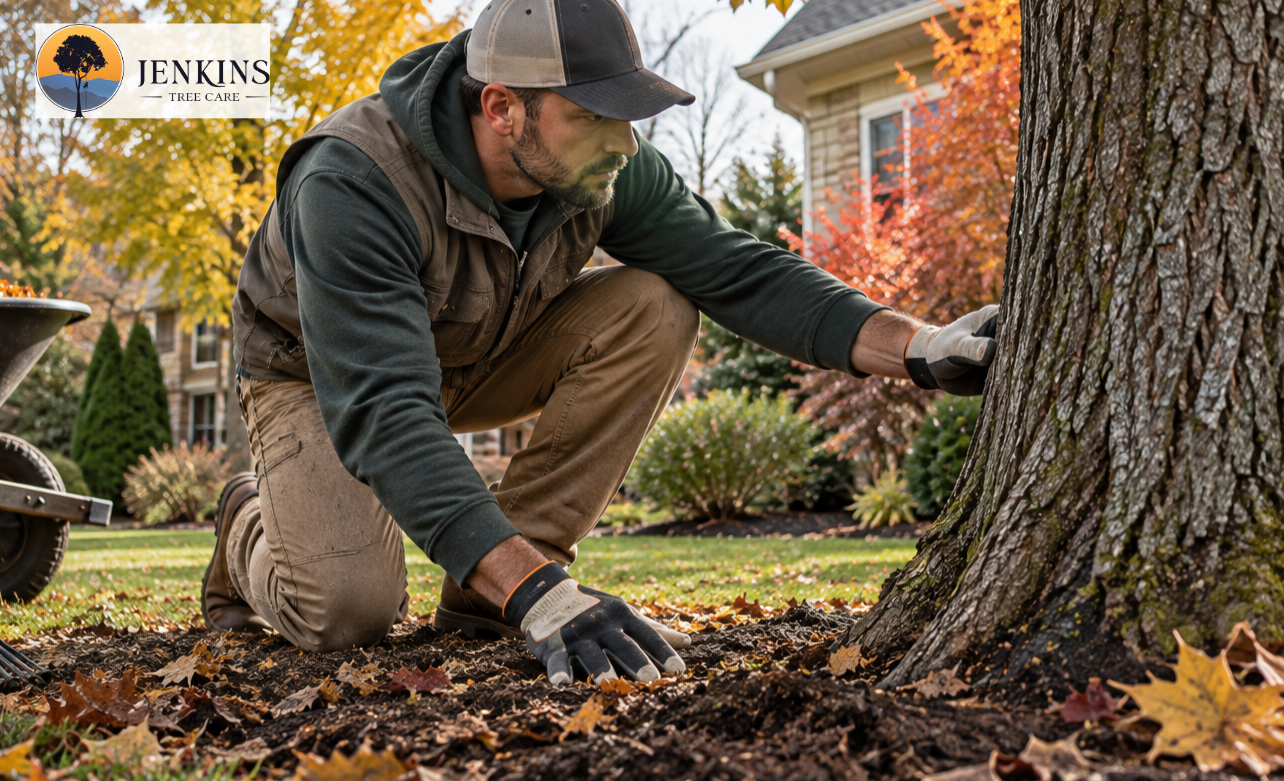
Begin your fall checklist by walking around your property and examining each major tree from different angles. Check for dead limbs, split branches, missing bark, fungus at the base, cavities, and branches rubbing against each other. Also, pay attention to leaf color and leaf drop patterns, as unusual changes can indicate stress, disease, or root problems. Taking the time for a careful inspection helps you identify which trees need attention before winter arrives.
Check the trunk and root flare.
The trunk is the tree’s backbone, so any cracks, seams, or soft spots need close attention. The root flare, where the trunk widens into the soil, should be visible and not buried under mulch, turf, or debris. If soil has piled against the trunk, excess moisture can increase the risk of rot and pest activity. Healthy roots are just as crucial as healthy branches, so don’t skip the base of the tree and the surrounding soil in your inspection.
Know when to call a professional
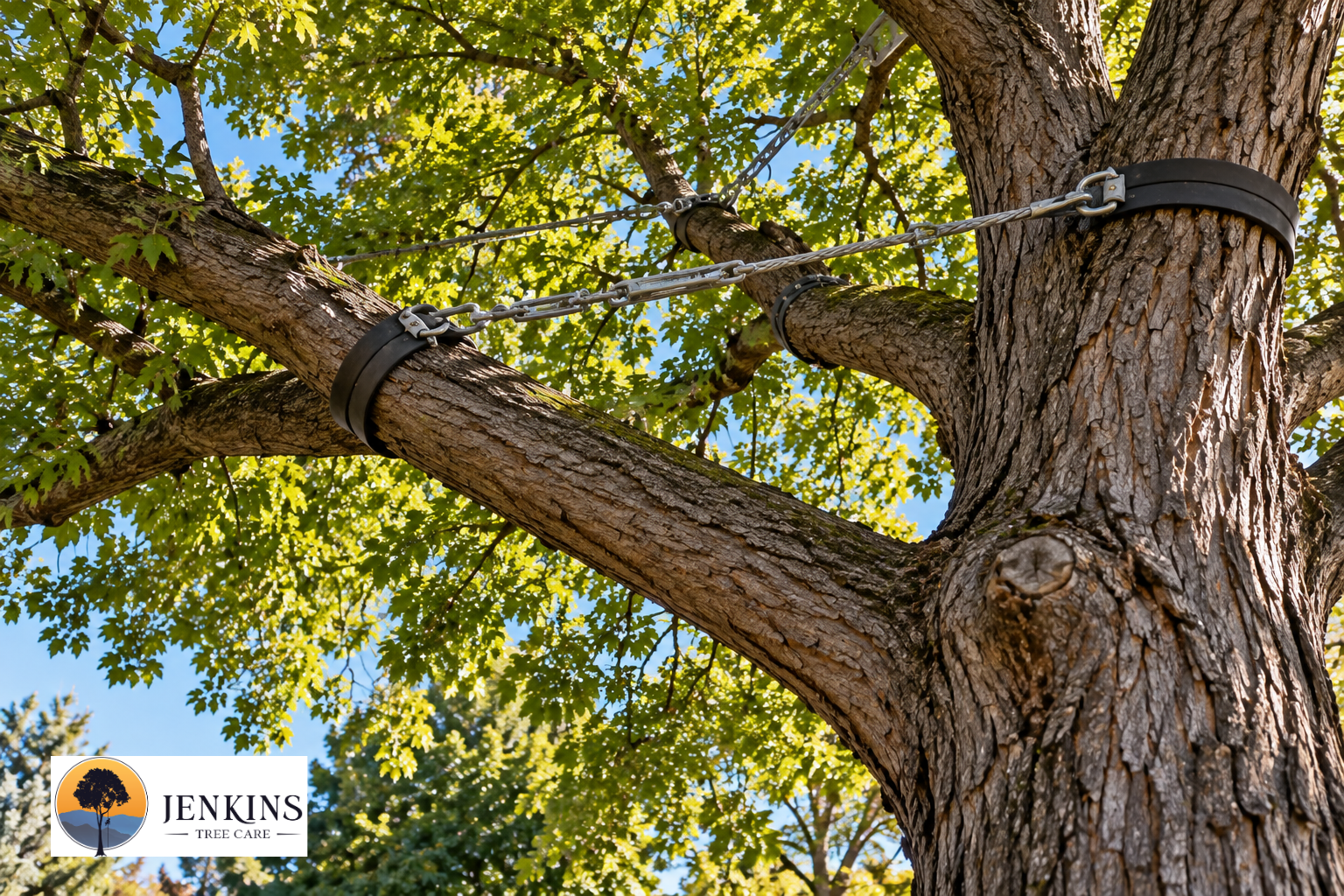
Some warning signs require a trained eye, especially if the tree is large, valuable, or close to a home. A certified tree professional can evaluate canopy balance, internal decay, and hidden structural concerns that are hard to spot from the ground. If you see a tree leaning more than usual, losing large sections of bark, or showing signs of repeated storm injury, it might be time for professional advice. Jenkins Tree Care can help homeowners decide whether pruning, cabling, or more extensive services are needed.
Prune Dead, Weak, and Overcrowded Branches
Remove hazards before heavy weather hits
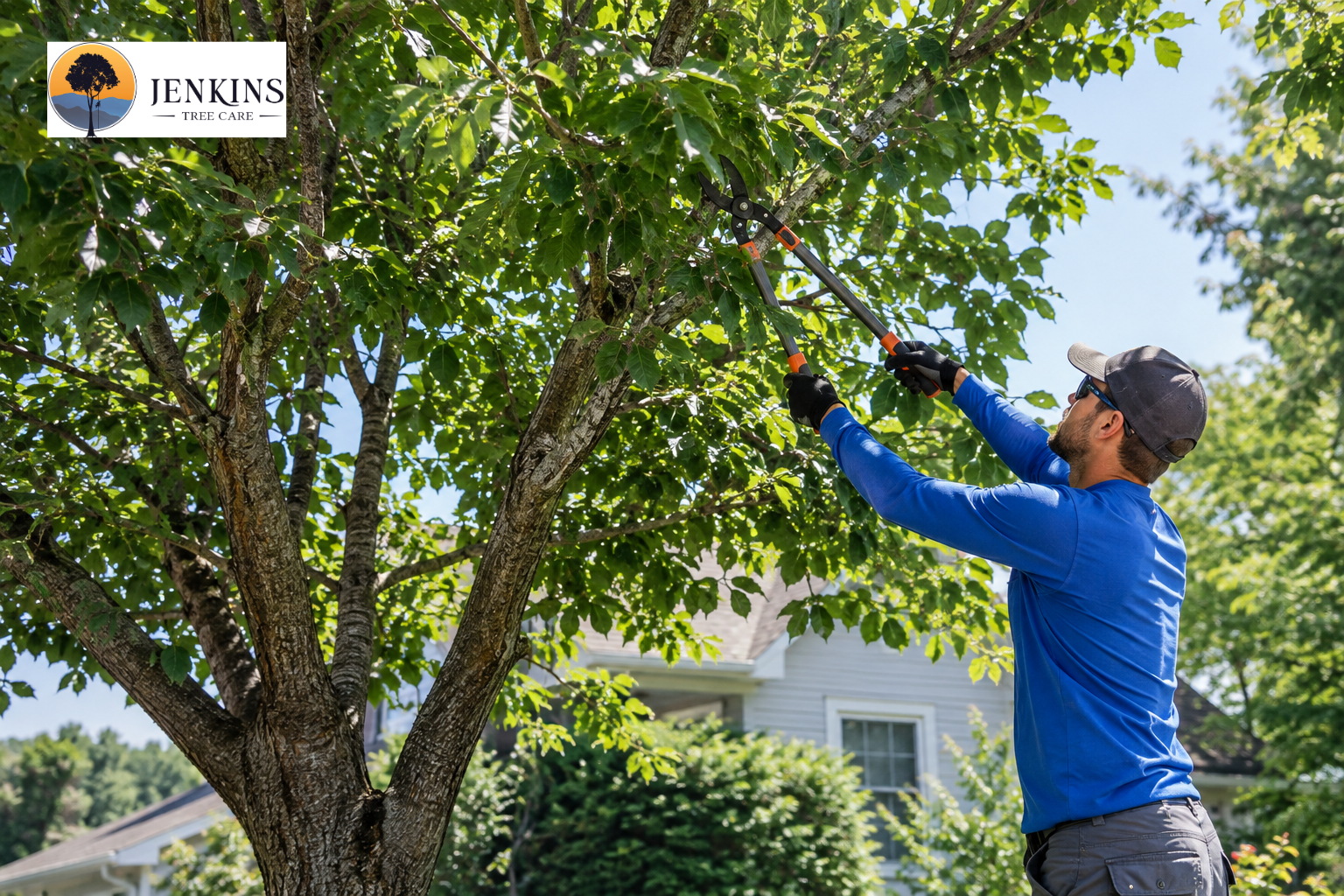
One of the most valuable fall maintenance tasks is removing dead or weak limbs before they snap in winter storms. Dead branches are often brittle and can break without warning when exposed to wind or ice. Strategic pruning improves safety by reducing the amount of deadwood and preventing branches from rubbing, crossing, or competing for space. Done right, pruning also helps a tree direct energy toward stronger growth in the spring.
Focus on structure, not just appearance
Good pruning is about more than just making a tree look neat. It’s about preserving a balanced canopy, supporting stronger branch attachment, and reducing points of failure. Trees neglected for years may need selective thinning or structural correction rather than a quick cosmetic cut. If you’re curious about the value of proper cutting techniques, Jenkins Tree Care has a helpful guide on expert tree pruning that explains how the right approach can improve long-term tree health.
Don’t over-prune in fall.
While fall is a good time to remove hazards, heavy pruning isn’t always ideal. Removing too much live growth can stress the tree right before dormancy, especially if the species is sensitive or already weakened. The goal is targeted correction, not aggressive reduction. For many trees, balancing cleanup with structural improvement is the safest and healthiest choice.
Protect Trees From Soil, Mulch, and Moisture Problems
Refresh mulch the right way.
Mulch can help trees retain moisture, moderate soil temperature, and protect roots from sudden weather changes. However, mulch piled against the trunk can trap moisture and invite decay. Use a thin, even layer around the root zone and keep it pulled back from the base of the tree. A proper mulch ring should look like a donut, not a volcano, supporting health without smothering the trunk.
Avoid damaging the root zone.
Tree roots often extend far beyond the visible canopy, so foot traffic, equipment, and construction work can all disrupt the area where the tree absorbs water and nutrients. Fall is a smart time to reduce unnecessary pressure on the root zone by limiting parking, digging, or heavy landscape work near mature trees. Soil compaction reduces oxygen availability and can weaken trees over time, making them more vulnerable in winter weather.
Water wisely before the ground freezes
Even though trees slow down in fall, they still benefit from moisture when rainfall is limited. Newly planted trees and drought-stressed trees may need extra watering until the soil begins to freeze. Deep watering is better than frequent shallow watering because it encourages stronger root development. Once the ground freezes, roots can’t take up water efficiently, so fall is your last chance to correct dry soil conditions before winter sets in.
Inspect for Pests and Disease Before Dormancy
Look for signs of insects and infection.
Fall is a useful time to spot pests and diseases because symptoms are easier to see after leaves thin out. Watch for holes in bark, sticky residue, sawdust-like frass, unusual swelling, fungal growth, and branch dieback. Many insect and disease issues are easier to manage when found early, before winter stress weakens the tree further. Catching these problems now can make the difference between recovery and decline.
Understand how local conditions affect risk.
Different regions and tree species face different pest pressures, and weather patterns can make some problems worse. Excess moisture can encourage fungal growth, while dry periods may stress roots and reduce natural defenses. For more on tree health standards and pest-management principles, the Penn State Extension site offers valuable resources that explain how environmental stress interacts with tree disease. Even if you’re not diagnosing the issue yourself, knowing the warning signs makes it easier to act quickly.
Remove diseased debris carefully.
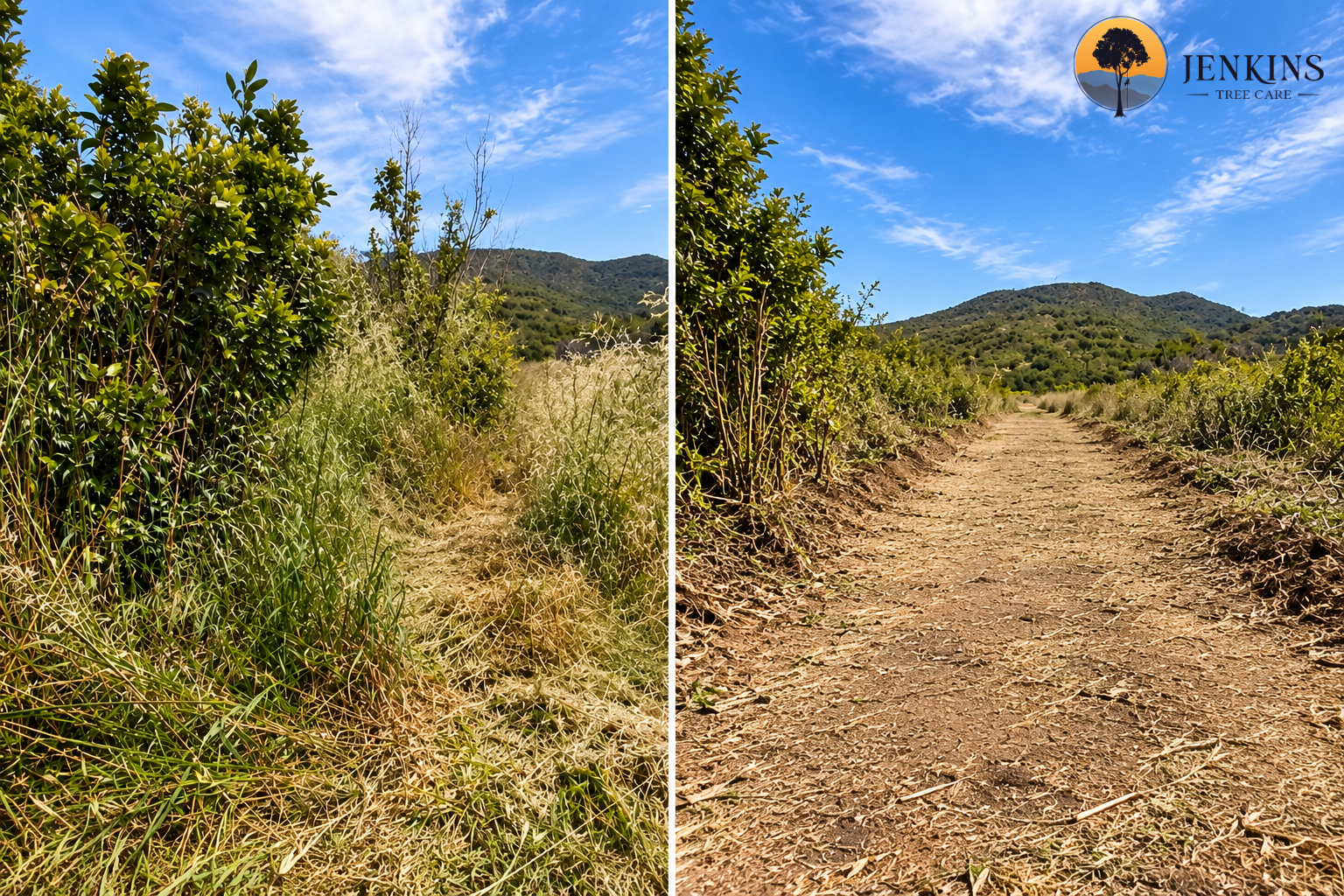
Fallen leaves, twigs, and infected branches should be removed and disposed of properly, especially if disease is active. Leaving contaminated debris under the tree can allow spores or insects to overwinter and reappear in spring. This is one reason seasonal cleanup matters as much as pruning. If your yard has a lot of leftover limbs and brush, brush removal can help you clear the area thoroughly and reduce hiding places for pests.
Support Young, Newly Planted, and Vulnerable Trees
Stake only when necessary
Young trees often need extra support, but staking should be used carefully. If stakes are too tight or left in place too long, they can limit trunk movement and weaken natural development. The goal is to stabilize a tree enough to protect it during establishment, not to hold it rigid forever. Check supports regularly and remove them once the tree can stand on its own.
Wrap trunks if needed
Some young trees benefit from trunk wraps or protective guards, especially if wildlife, sunscald, or temperature swings are a concern. Trunk protection can help reduce winter injury and bark splitting on thin-barked species. It’s important to install wraps correctly and remove them when they’re no longer needed, as moisture trapped under coverings can create other problems. Used properly, trunk protection is another way to help a tree make it through winter with less stress.
Prioritize weak or recently transplanted trees.
Recently planted trees have smaller root systems and are less able to handle drought, wind, and freezing conditions. These trees may need more attention than established specimens because their root anchors are still developing. A few extra steps now, such as deep watering, mulch correction, and support checks, can significantly improve survival. If a young tree has structural problems from the start, tree cabling may be worth discussing as a way to reduce risk and preserve a valuable tree.
Prepare for Ice, Wind, and Heavy Snow
Reduce canopy weight where appropriate.
Winter weather can be tough on trees with dense canopies, long overextended limbs, or multiple weak attachments. Selective thinning can reduce wind resistance and lower the chance that a tree will split or shed heavy limbs during a storm. This work should be done carefully so the tree remains healthy and balanced. The goal is to improve resistance to weather, not to strip the canopy unnecessarily.
Clear hazards near the tree
Look around each tree and remove hazards that could make storm damage worse. Broken patio items, loose yard debris, and stacked materials near the trunk can all complicate cleanup if a branch falls. It’s also wise to clear low limbs that hang over walkways, driveways, or roofs if they already appear weak or overloaded. For trees too close to structures, targeted trimming may reduce risk before the first major winter storm.
Plan for emergency access.
Storm response is easier when your yard is organized before weather hits. Make sure you can access gates, driveways, and key areas of the property in case a branch comes down. Keep contact information for a trusted tree service handy in case you need quick help after a storm. Being prepared doesn’t prevent all damage, but it can shorten response time and make the cleanup process less stressful.
Know When Tree Removal Is the Safer Choice
Some trees cannot be safely preserved.
Not every tree can be saved with pruning, support, or seasonal care. If a tree has severe decay, major trunk cracking, extensive root damage, or an unstable lean, removal may be the best option. Winter can worsen these problems because frozen soil and storm loads reduce a tree’s ability to compensate. Making the right call before an emergency is often safer and less expensive than waiting for failure.
Evaluate risk versus value.
Homeowners often struggle with the emotional side of tree removal, especially when a tree provides shade or sentimental value. It helps to compare the tree’s long-term health potential against the risk it poses to structures and people. If the tree is declining rapidly or is hazardous, removal can protect the rest of the landscape and open the door for healthier replacement planting later. For more on identifying danger signs, see signs you need to remove a tree.
Finish the job with proper cleanup.
When removal is necessary, the process should include safe cutting, debris hauling, and stump management if desired. Leftover stumps can become obstacles, attract pests, and interfere with future landscaping plans. In many cases, pairing removal with stump grinding leaves the property cleaner and easier to maintain. If you’re comparing complete cleanup options, our article on expert stump grinding explains why finishing the job matters.
Practical Fall Tree Care Checklist for Homeowners
Step-by-step seasonal checklist
Use this simple checklist as you prepare your yard for winter: inspect each tree, remove dead branches, refresh mulch, check soil moisture, look for disease or pests, evaluate young trees, and identify any hazards near structures. If you have large or unstable trees, schedule professional help before the first strong storm. A checklist keeps the process manageable and helps you prioritize the most important tasks first. It also gives you a repeatable routine you can use every autumn.
When to schedule service
The best time to handle fall tree care is before the weather turns harsh and schedules fill up with storm-related emergency work. Early fall is ideal because trees are still easier to evaluate, and there is usually enough time to complete corrective work safely. If your yard needs more than a simple cleanup, Jenkins Tree Care can help with tree trimming, tree pruning, and other preventative services designed to reduce winter risk.
How to keep up year after year
Successful tree care isn’t a one-time task. Trees respond best to ongoing monitoring, seasonal maintenance, and prompt attention when something changes. If you build fall inspection and cleanup into your yearly routine, you’re more likely to catch problems early and preserve the trees that add value to your property. For a broader look at long-term maintenance, our post on professional tree care explains how regular upkeep supports healthier landscapes over time.
Frequently Asked Questions About Fall Tree Care
Should I fertilize trees in fall?
Some trees might benefit from fertilization, but it depends on species, soil condition, and overall health. Overfertilizing can encourage tender growth that isn’t ideal before winter dormancy. A soil test is often the best starting point if you’re unsure whether nutrients are needed. In many cases, water management and proper pruning provide more immediate benefits than adding fertilizer without a clear diagnosis.
Is fall a good time to plant trees?
Yes, fall is often an excellent time to plant many trees because cooler air temperatures reduce stress while roots can keep developing in warm soil. The key is to choose the right species, plant at the correct depth, and give the tree enough time to establish before deep freezes. Newly planted trees need consistent care, especially during dry periods. Proper fall planting can give a tree a strong head start for the following spring.
How do I know if pruning should wait until winter?
Light cleanup and hazard removal can be done in fall, but major structural pruning is sometimes better scheduled for the dormant season depending on the species and the tree’s condition. If you’re unsure, it’s best to ask an arborist to evaluate the tree and recommend the safest timing. Different trees respond differently to cuts, and a professional can help you avoid unnecessary stress.
Get Your Trees Ready for Winter With Confidence
Preparing trees for winter is one of the smartest investments you can make in your property. A careful fall routine helps you reduce storm damage, protect people and structures, and support stronger growth when spring returns. It also gives you peace of mind knowing you’ve addressed visible hazards before they become expensive problems. If your trees need pruning, removal, or cleanup before winter, Jenkins Tree Care is ready to help with professional service and clear communication.
Take a few minutes this season to inspect your trees, complete the checklist, and schedule any needed work before the weather turns. Whether you need preventative maintenance, storm preparation, or help with an already risky tree, taking action now can save time and reduce stress later. For trusted local support, contact Jenkins Tree Care at (828) 279-5756 or email devin@jenkinstreecare.com to discuss the best fall tree care plan for your property.